Skip to content
Syracuse Foundation

Serving Syracuse and nearby areas

Sloping Floors in Syracuse, NY

A sloping floor means something under it has sagged, settled or rotted, so get a free inspection in Syracuse to find which one and a written price to level it.

Book a free foundation inspection

Tell us what you are seeing. A local specialist calls you back the same business day.

Why basements crack and leak in Syracuse

Syracuse averages about 127.8 inches of snow a year and has averaged about 134 days a year below freezing. Snowmelt soaks slow draining glacial till and lake clay soils, then the soil freezes and pushes on basement walls. About 43 percent of the city's homes were built in 1939 or earlier, many on stone or early block walls.

What it costs

Typical published ranges for Syracuse. The contractor's written estimate is the price, and the inspection is free.

WorkTypical range
Inspection and written estimate Free
Sagging floor repair, most jobstypical range, national guide $1,000 to $8,500
Sistering a floor joist $150 to $325per joist
Main support beam replacement $2,000 to $10,000
Foundation repair behind a sagging floor $2,200 to $8,200

See typical foundation repair prices in Syracuse

What you will notice

Sloping floors creep up slowly. You often get used to them until something makes them obvious.

Things roll

A marble, a ball or a can rolls to one side of the room.

A dip in the middle

The floor is lower in the center of the house, often over the main beam.

A slope to one wall

The floor runs downhill toward one outside wall.

Bouncy or soft spots

The floor gives when you walk, often near a bathroom, a kitchen sink or over a crawl space.

Gaps at the baseboard

A space opens between the floor and the bottom of the trim.

Doors that swing on their own

A door that drifts open or shut, or no longer latches.

Cracked tile

Grout or tiles cracking in a line across the room.

Cracks over doors

Diagonal cracks in plaster or drywall at the top corners of door frames.

Why floors slope in Syracuse homes

The houses are old. About 43 percent of homes in Syracuse were built in 1939 or earlier, and another third between 1940 and 1969. A floor framed a century ago has carried furniture, people and snow load on the roof for a long time. Wood joists and beams slowly sag under that load.

Old framing was different. Many older homes have joists that span farther than they would today, beams resting on wood posts or brick piers, and walls moved or cut through during past remodels. Fixr lists long spans, altered framing and age as common causes of sagging floors.

Water rots wood. The city averages about 127.8 inches of snow a year, the most on one ranking of the snowiest U.S. cities. A damp basement or crawl space keeps the wood above it damp too. Over years, the sill plate, the ends of joists and the bottom of wood posts can rot. That is where many Syracuse floors start to drop.

Posts sink. In many old basements, the main beam sits on posts that stand on the floor slab or on a small pad. A post with no real footing can sink into soft or wet ground.

The foundation moves. If a wall bows in, or a corner settles, the floor framing on that side drops with it. Syracuse has averaged about 134 days a year below freezing, and frost against basement walls is a big reason walls move here.

When it is cosmetic and when it is urgent

Usually old settling, keep watching:

  • A gentle slope that has been there as long as you have owned the house
  • No new cracks, no soft spots, doors still close

Get it looked at soon:

  • The slope is getting worse year to year
  • A soft or spongy spot, especially near water
  • A beam that has cracked, or a post that leans or has rotted at the bottom
  • New cracks upstairs, or doors that just started sticking
  • The slope runs toward a basement wall that bows or leaks

What the fix usually is

The inspector goes under the floor, into the basement or crawl space, and finds what is holding the floor up and what has failed.

  1. Add support. New steel posts on proper footings under a sagging beam. This is one of the most common fixes in older basements.
  2. Sister joists. A new joist is bolted alongside a weak or cracked one.
  3. Replace rotted wood. Rotted sill plate, joist ends or a beam get cut out and replaced.
  4. Raise slowly. Jacks lift the floor a little at a time so the house above can adjust.
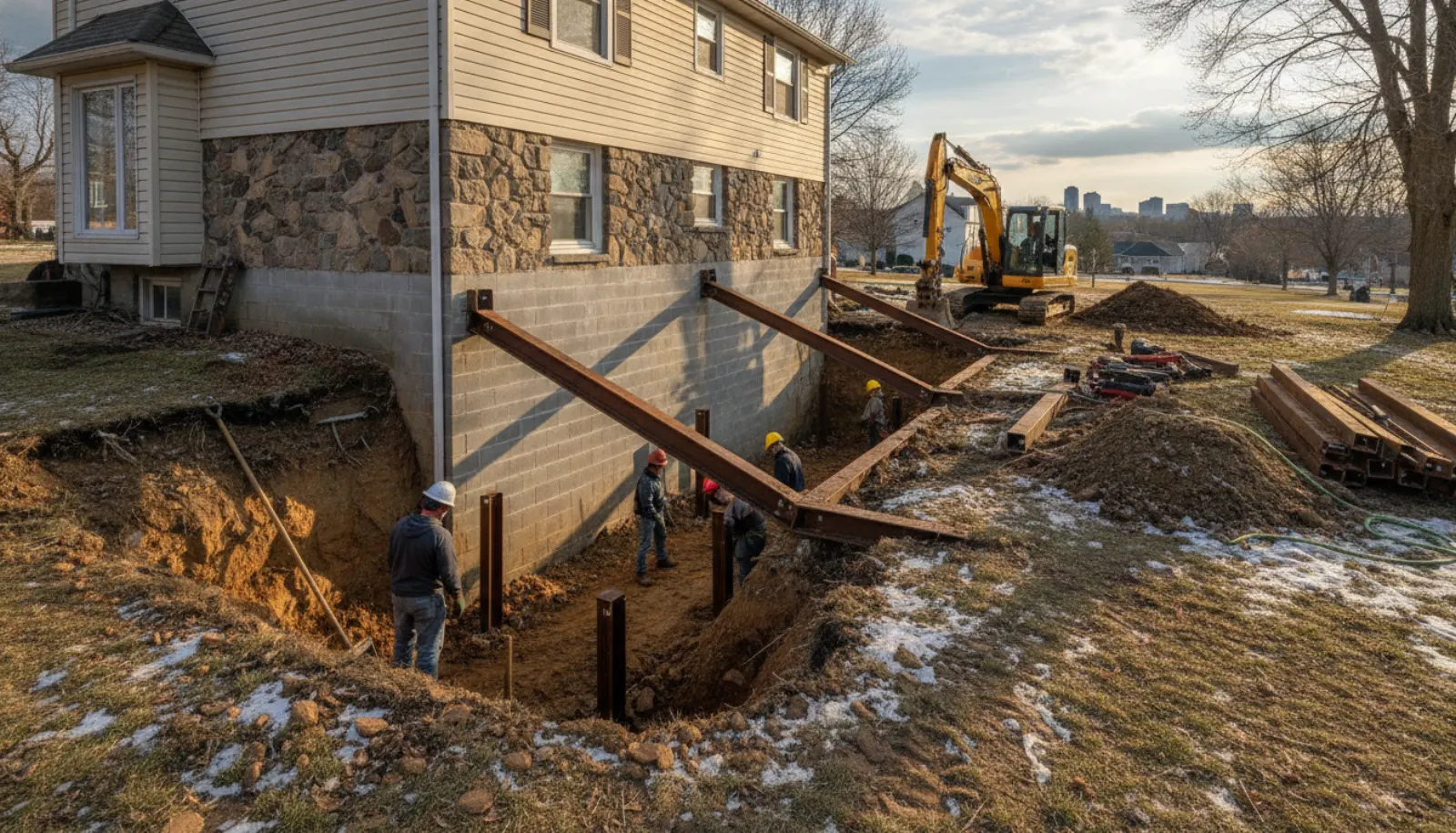
  5. Fix the cause. Dry out the basement or crawl space, or stabilize the foundation wall that moved.

What it typically costs

Fixr puts most sagging floor repairs at $1,000 to $8,500. Sistering a joist runs about $150 to $325 per joist, and replacing a main support beam about $2,000 to $10,000. When the foundation is the cause, the foundation repair itself often runs $2,200 to $8,200. These are typical ranges, not quotes. Your free inspection gives you the real number in writing.

What to do before the inspection

  • Lay a long level or a marble on the floor in a few rooms and note which way things roll.
  • Write down which doors stick or swing.
  • Check the basement for wet spots, rotted wood or leaning posts, and take photos.
  • Clear a path to the beam, the posts and any crawl space hatch.
  • Do not jack the floor yourself.

Frequently asked questions

Is a sloping floor normal in an old Syracuse house?

Some slope is common in a house that is 80 or 100 years old. Wood shrinks and beams sag a little over time. What matters is whether it is still getting worse, and whether it comes with cracks, sticking doors or a soft spot.

How much slope is too much?

There is no single number, but a slope you can feel when you walk, a ball that rolls fast, or a change you notice from one year to the next is worth a look. A dip that grows near a wet basement wall or an old crawl space is more urgent.

Can a sagging floor be lifted back to level?

Often part of the way. Crews raise a sagging beam slowly with jacks, sometimes over weeks, so the plaster and trim upstairs do not crack. Some old houses are never made fully level, just stopped and made solid.

Is the problem the floor or the foundation?

It can be either. A dip in the middle of the house usually points to the main beam or its posts. A slope toward one outside wall points more to the foundation on that side. The inspection looks under the floor to tell which.

Do I need a permit to fix a sagging floor?

Structural repairs usually need one. The City of Syracuse Central Permit Office issues permits for work on one and two family homes. The contractor should pull it.

Can I put a jack post under it myself?

A post on a bare basement floor can crack the slab or push through it, and jacking too fast can crack walls upstairs. A proper post needs a solid footing under it. Have the cause checked first.

Get your floor checked

A floor that keeps sinking usually means wood or a foundation that keeps failing. Call (315) 623-3956 or send the short form, and a local foundation crew will call you back, usually the same day. The inspection is free and the price comes in writing.

(315) 623-3956 Free inspection