Skip to content
Syracuse Foundation

Serving Syracuse and nearby areas

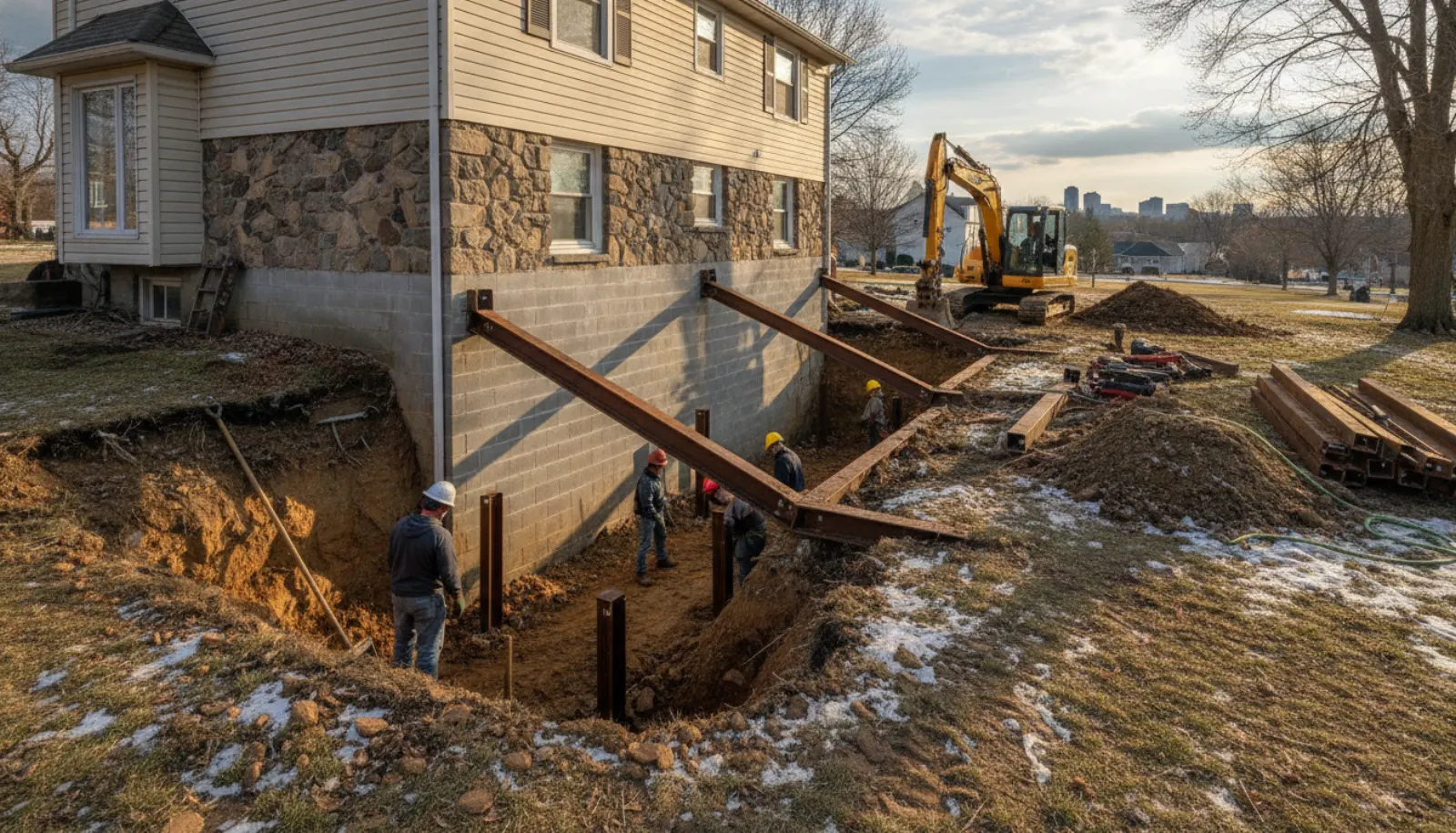
Crumbling Stone Foundation in Syracuse, NY

Mortar that turns to sand and stones that shift mean water has been working on your stone foundation for years, so get a free inspection in Syracuse and a written price to repair it the right way.

Book a free foundation inspection

Tell us what you are seeing. A local specialist calls you back the same business day.

Why basements crack and leak in Syracuse

Syracuse averages about 127.8 inches of snow a year and has averaged about 134 days a year below freezing. Snowmelt soaks slow draining glacial till and lake clay soils, then the soil freezes and pushes on basement walls. About 43 percent of the city's homes were built in 1939 or earlier, many on stone or early block walls.

What it costs

Typical published ranges for Syracuse. The contractor's written estimate is the price, and the inspection is free.

WorkTypical range
Inspection and written estimate Free
Repointing masonry, walls under 8 feettypical range, national guides $5 to $10per sq ft
Repointing masonry, all heights $5 to $25per sq ft
Most foundation repairs, national $2,200 to $8,200
Basement waterproofing in Syracuse, by type of job $2,000 to $8,100

See typical foundation repair prices in Syracuse

What a crumbling stone foundation looks like

Stone basements age in their own way. You will usually see the joints go first, then the stones.

Sandy mortar

Mortar that rubs off like sand, and little piles of grit along the base of the wall.

Deep, empty joints

Gaps between stones you can push a finger or a screwdriver into.

Loose or missing stones

A stone that rocks when you push it, or one that has fallen out.

A bulge

One area of the wall that pushes into the basement, often with loose stones around it.

Water between the stones

Seepage after a thaw or rain, leaving dark streaks or white salt on the face of the wall.

Old patches failing

Cement patches or coatings that crack, peel or fall off in sheets.

Damp, musty air

Stone holds moisture, so stone basements often feel damp even with no puddle.

Why stone foundations crumble in Syracuse

There are a lot of them. About 43 percent of homes in Syracuse were built in 1939 or earlier. Building stone, including limestone, was quarried around Syracuse for generations, so many older houses sit on stone walls set in mortar.

Water is the main cause. Old foundation walls were not sealed against water. Every thaw and every heavy rain, water moves through the joints. Over decades it washes out the mortar, grain by grain. This Old House calls water the main reason mortar breaks down, along with poor grading, clogged or loose gutters and plants growing right against the wall.

Syracuse has a lot of water. The city averages about 127.8 inches of snow a year, the most on one ranking of the snowiest U.S. cities. When it melts, the soil against the wall stays wet for weeks.

Frost works the joints. Syracuse has averaged about 134 days a year below freezing. Water in a joint freezes and swells, opens the joint a bit more, then thaws. Over many winters that loosens stones.

When it is cosmetic and when it is urgent

Usually maintenance:

  • A little sand along the base of the wall
  • Shallow joints in a few spots on a wall that stays dry
  • Old paint or coating flaking off

Get it looked at soon:

  • Stones that are loose, shifting or have fallen out
  • A bulge in the wall, or one that grew since last year
  • Joints that are empty deep into the wall over a large area
  • Water coming through every thaw
  • Cracks upstairs or a floor that dropped near that wall

What the fix usually is

A good stone repair starts with water, not mortar. Fixing the joints while water keeps pouring through only buys a few years.

  1. Cut the water at the source. Gutters, downspouts carried well away from the wall and soil that slopes away. This Old House suggests downspouts at least 3 feet out and plants at least 3 feet from the wall.
  2. Repoint the joints. The crew rakes out loose mortar and packs in new mortar. The mortar should be softer than the stone so the joints, not the stones, take the movement. This Old House notes a softer Type N mortar is preferred over a harder Type S for fieldstone.
  3. Reset or rebuild. Loose stones get reset. A badly bulged or failing section may be taken down and rebuilt.
  4. Drain it. Where water still comes in, an inside drain and sump along the base of the wall carries it away.

What it typically costs

National guides put repointing at about $5 to $10 per square foot for walls under 8 feet, and $5 to $25 per square foot across all heights. Stone joints are often wider and rougher than brick, so stone basements can land higher in that range. Resetting stones, rebuilding a bulged section or adding drainage adds to the job. One local guide puts basement waterproofing in Syracuse at $2,000 to $8,100. These are typical ranges, not quotes. Your free inspection gives you the real number in writing.

What to do before the inspection

  • Sweep the base of the wall, then check in a few weeks how much sand comes back.
  • Photograph any loose stones or bulges with the date.
  • Do not pull loose stones out or pack them with cement.
  • Clear gutters and point downspouts away from the house.
  • Note when water comes in and where.

Frequently asked questions

Is a stone foundation bad?

No. Many stone foundations have held up houses for well over 100 years. They need different care than block or poured walls, mainly keeping water off them and keeping the joints filled with the right mortar.

Can I repoint my stone basement myself?

Small spots, yes, if you rake out loose mortar and use a soft mortar made for old masonry. Large areas, loose stones, or a wall that bulges are a job for a mason or foundation crew. Hard modern mortar in the wrong place can do more harm than good.

Why does my stone wall leave sand on the floor?

The old mortar between the stones is breaking down, mostly from water passing through it for decades. A little sand now and then is common. Piles of it, or joints you can poke a finger into, mean the wall needs work.

Should I seal or parge my stone walls?

A coating can help on the inside, but only after the water is handled. If water keeps coming through, a coating can trap it, and it peels or the mortar behind it keeps washing out. Ask the inspector about the water first.

Do stone foundations bow like block walls?

They can bulge, usually in one area where mortar has washed out and stones have moved. Frost and wet soil push on them the same way. A bulge with loose stones is more urgent than sandy joints alone.

Get your stone foundation checked

Stone walls can last another century with the right care. Call (315) 623-3956 or send the short form, and a local foundation crew will call you back, usually the same day. The inspection is free and the price comes in writing.

(315) 623-3956 Free inspection